

Abstract
Problem and Didactic Foundations
Data-driven algorithmic decision-making systems, many of them based on machine learning,
exert a significant influence on societal participation. Yet their deployment frequently
reproduces or amplifies discrimination, as documented cases in recidivism prediction, hiring
or health care show. Preparing upper secondary students to critically interrogate these
systems demands a didactic reconstruction of algorithmic fairness. Didactically, a core
challenge lies in enabling students to recognize that fairness is not an objective algorithmic
property, but a contested concept characterized by competing formal definitions (both
philosophical and mathematical) and trade-offs between predictive performance and
institutional objectives.
Design-Based Research Projects and Learning Designs
In our talk, we highlight two design-based research initiatives that operationalize these
concepts through interactive, accessible learning environments. Crucially, the designed
activities tie directly into core topics of secondary school mathematics and statistics curricula
– building upon foundational concepts such as frequency distributions, contingency tables,
and conditional proportions. Using real-world scenarios such as credit scoring, these
environments combine visual representations (e.g., confusion matrices) with interactive
elements (e.g., sliders). This setup empowers students to act as decision-makers and
regulators, directly observing the downstream consequences of their chosen statistical
metrics on protected groups.
Empirical Findings and Educational Implications
We report on empirical insights from classroom studies conducted with upper secondary
students. Our qualitative analysis reveals distinct patterns in student reasoning regarding (a)
fairness as a normative concept and (b) the role and justification of statistical arguments. We
conclude with key didactic recommendations for fostering reflective, data-informed discourse
on responsible AI in schools.
Sarah Schönbrodt
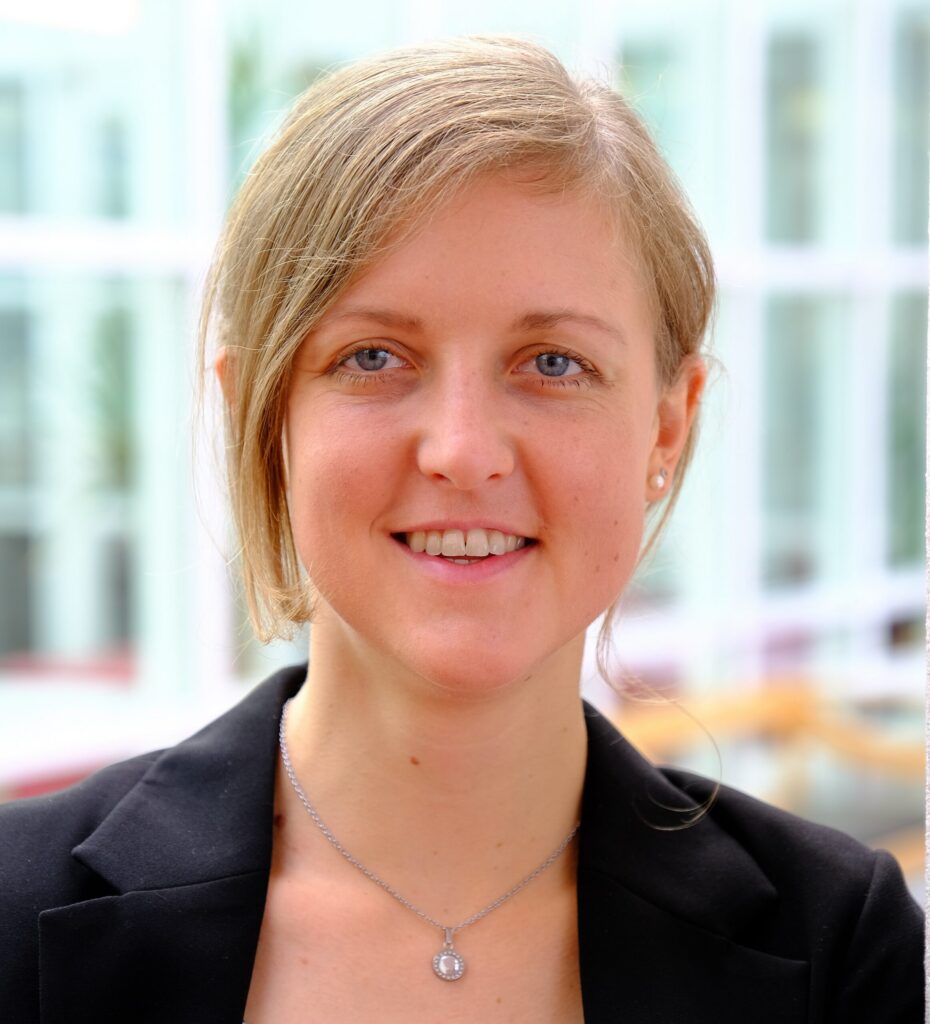
Sarah Schönbrodt is an Assistant Professor of Mathematics Education (Tenure
Track) at the University of Salzburg, Austria. She completed her teacher training
studies at RWTH Aachen University and earned her PhD in mathematics education at
Karlsruhe Institute of Technology in 2022, where she subsequently worked as a
postdoctoral researcher and head of student labs (CAMMP and Simulierte Welten).
Her research focuses on teaching and learning the mathematical and statistical
foundations of artificial intelligence, data-driven modeling, and algorithmic
decision-making. Together with the ProDaBi team she initiated the international
symposium series on “Integrating AI and Data Science into School Education Across
Disciplines”. She is part of the leadership team of the non-profit initiative KI macht
Schule, which designs and conducts AI workshops and teacher professional
development combining technical foundations, applications, and ethical implications.
Clara Müller
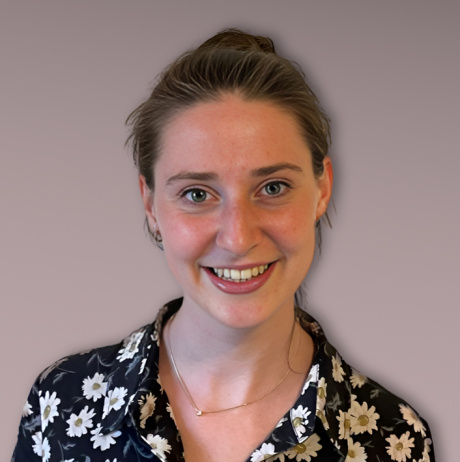
Clara Müller is a PhD student in mathematics education at Karlsruhe Institute of Technology
(KIT), Germany. Since 2025, she has been a researcher at KIT’s Scientific Computing
Center, working in the projects CAMMP and Simulierte Welten. She is a trained secondary
school teacher and holds an MEd in Mathematics and History and an MA in Philosophy
(University of Bonn). Her PhD project addresses fairness in machine learning as a topic for
mathematics education. It is supervised by Prof. Dr. Martin Frank and funded by the German
Academic Scholarship Foundation. Her research focuses on the design and empirical
investigation of learning environments for data science and AI education.